

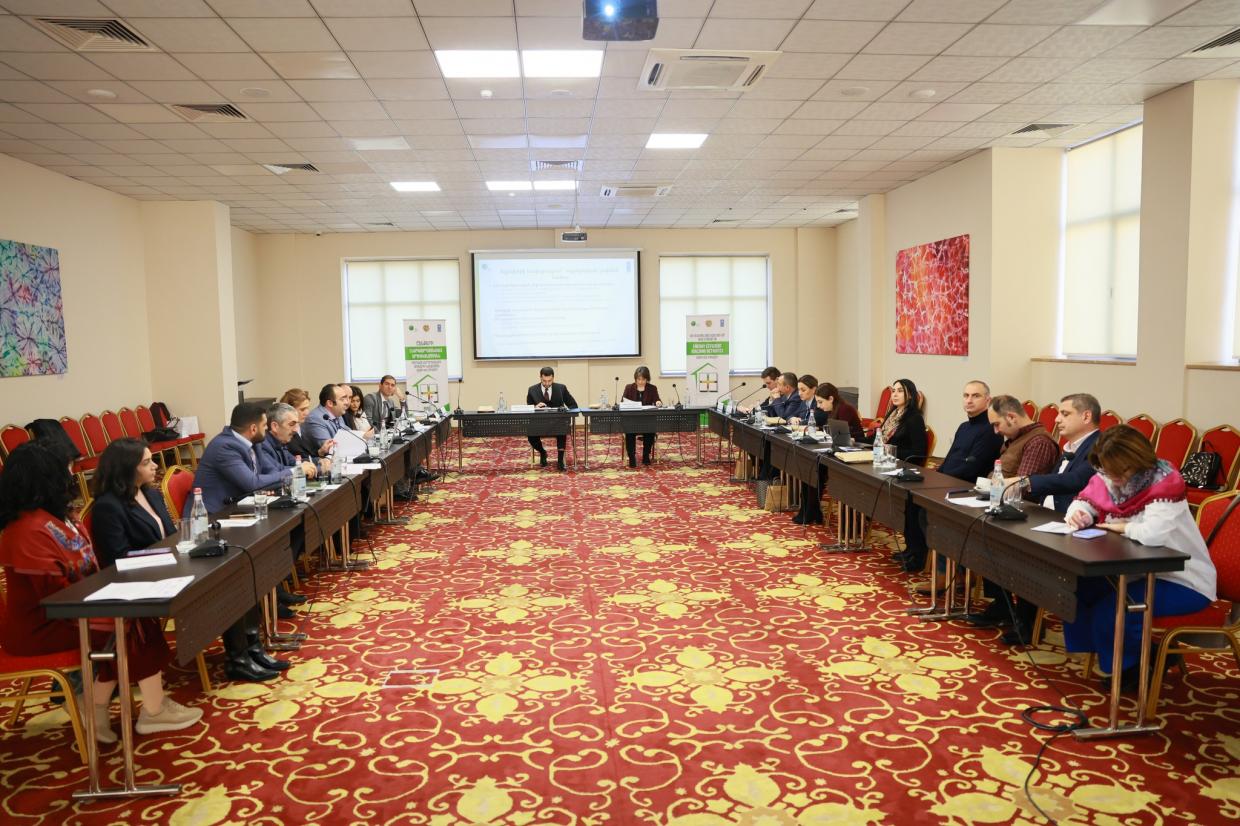
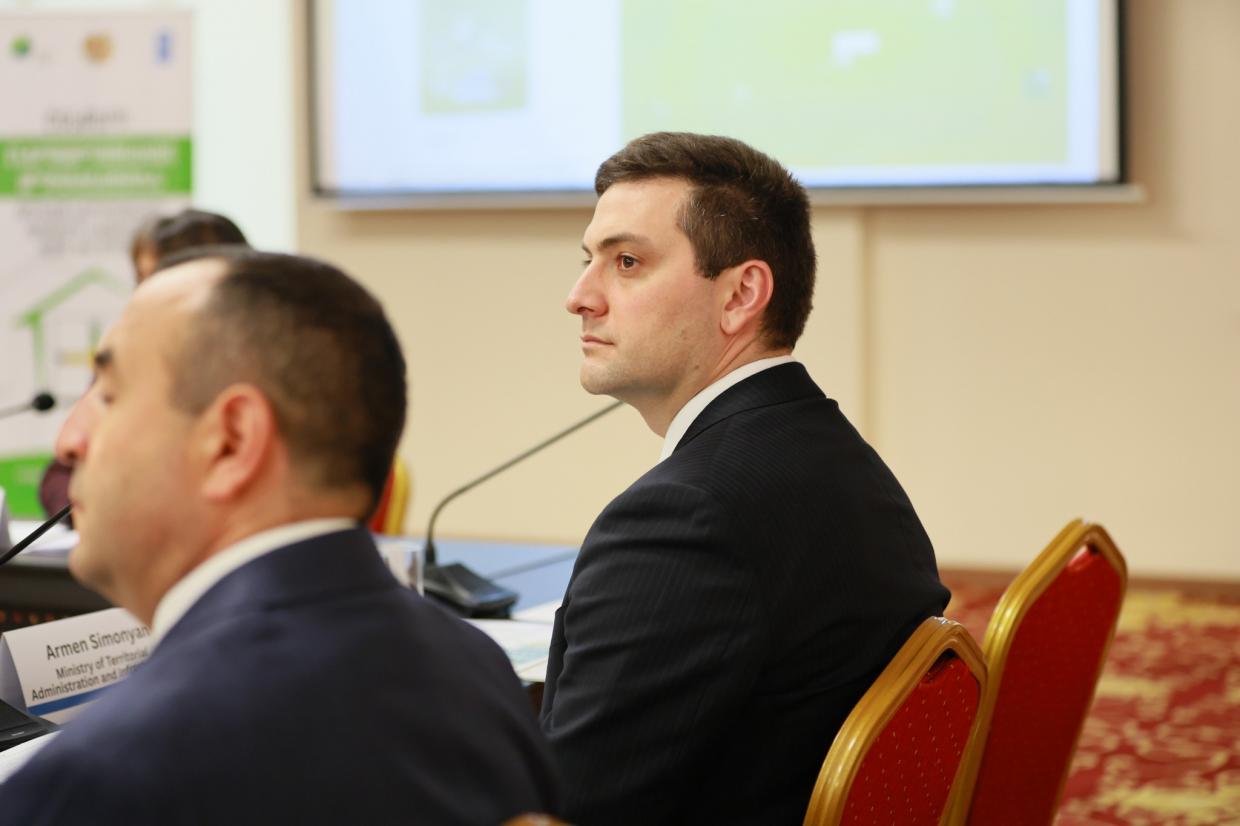
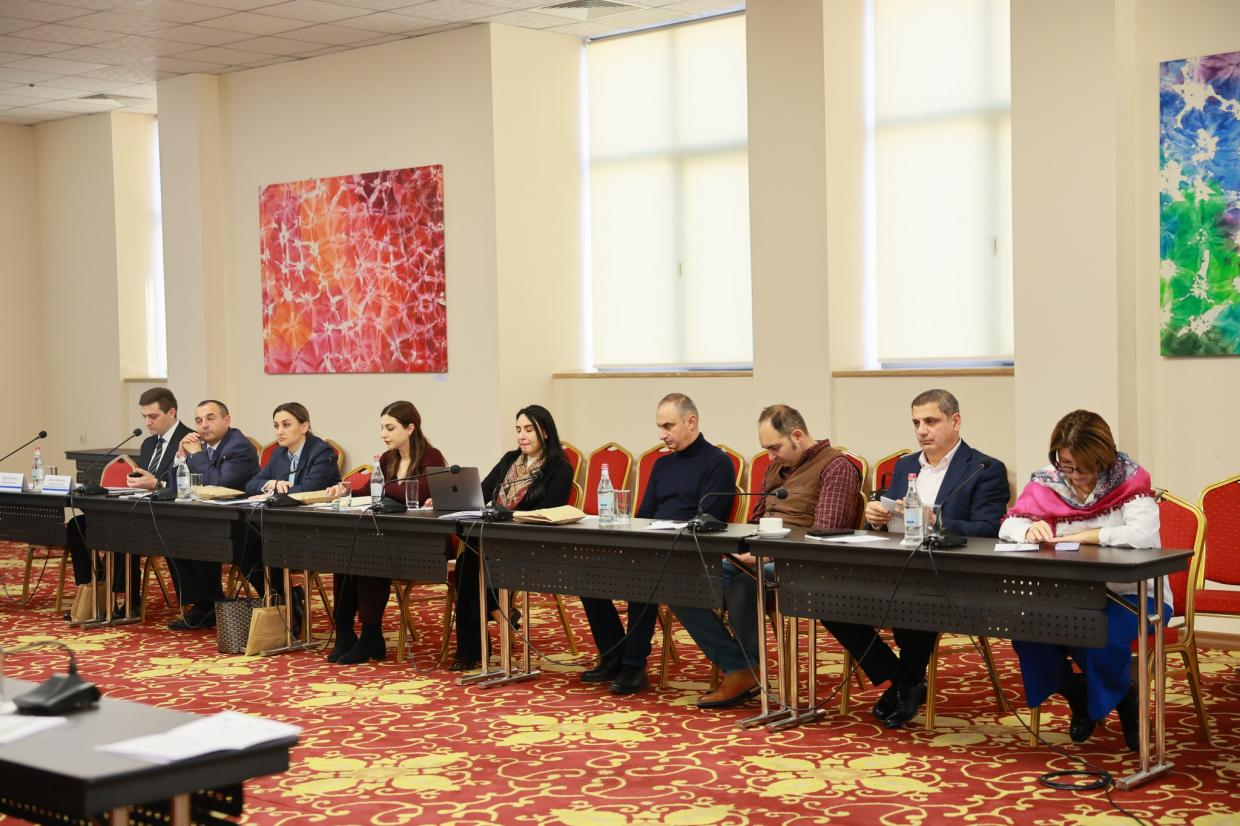
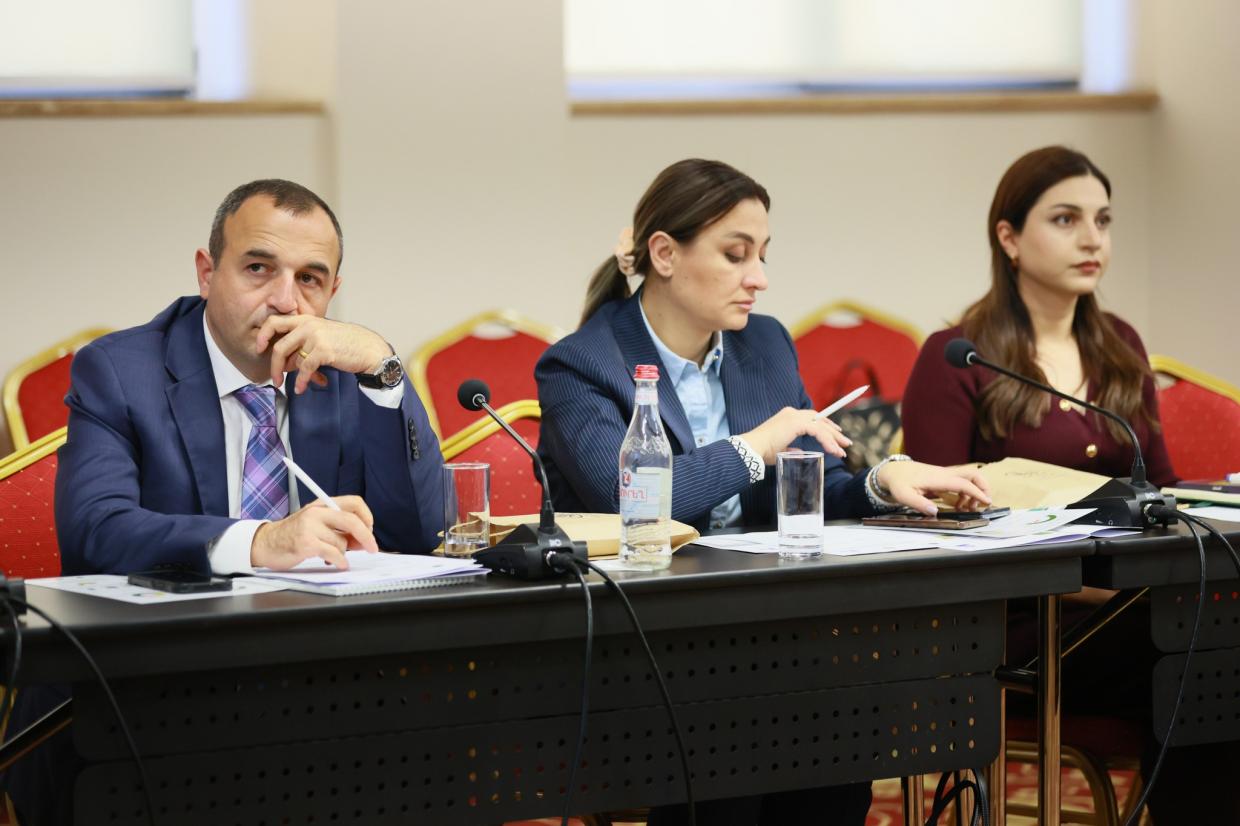
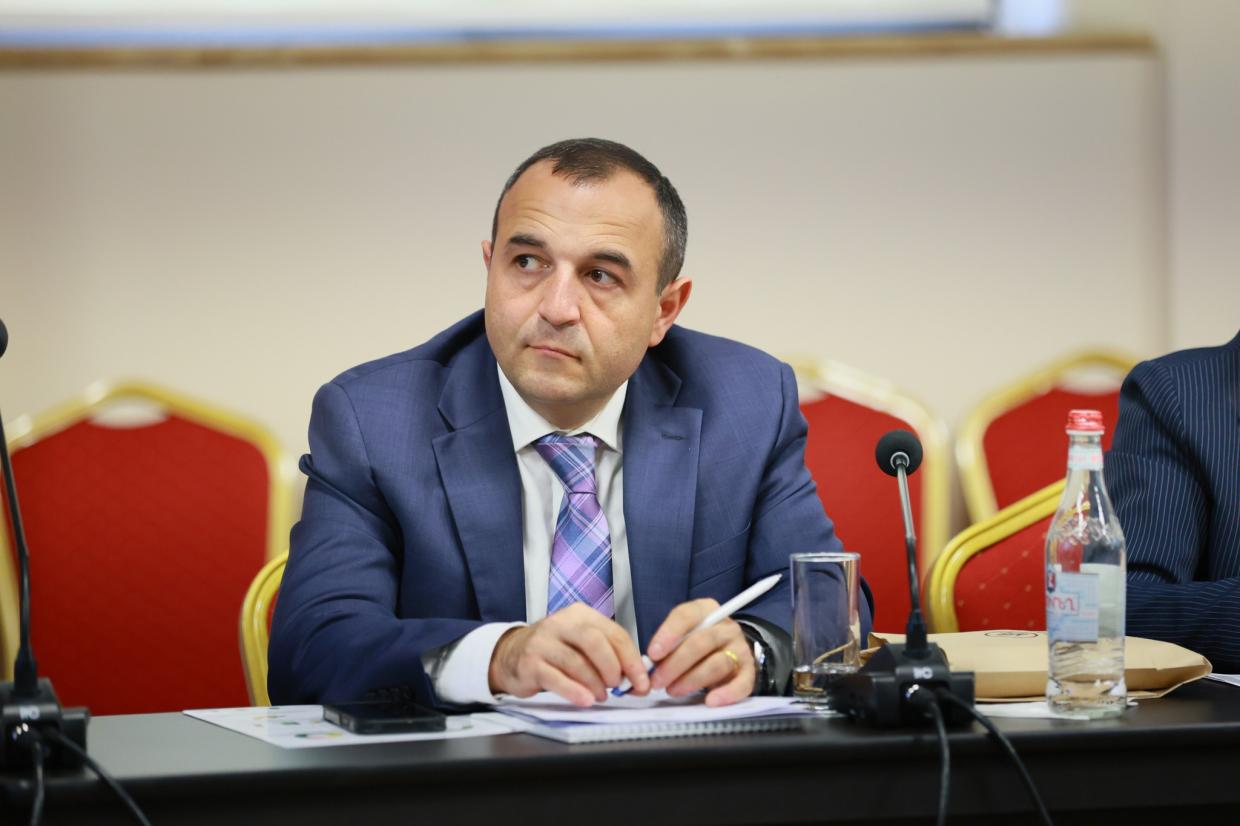
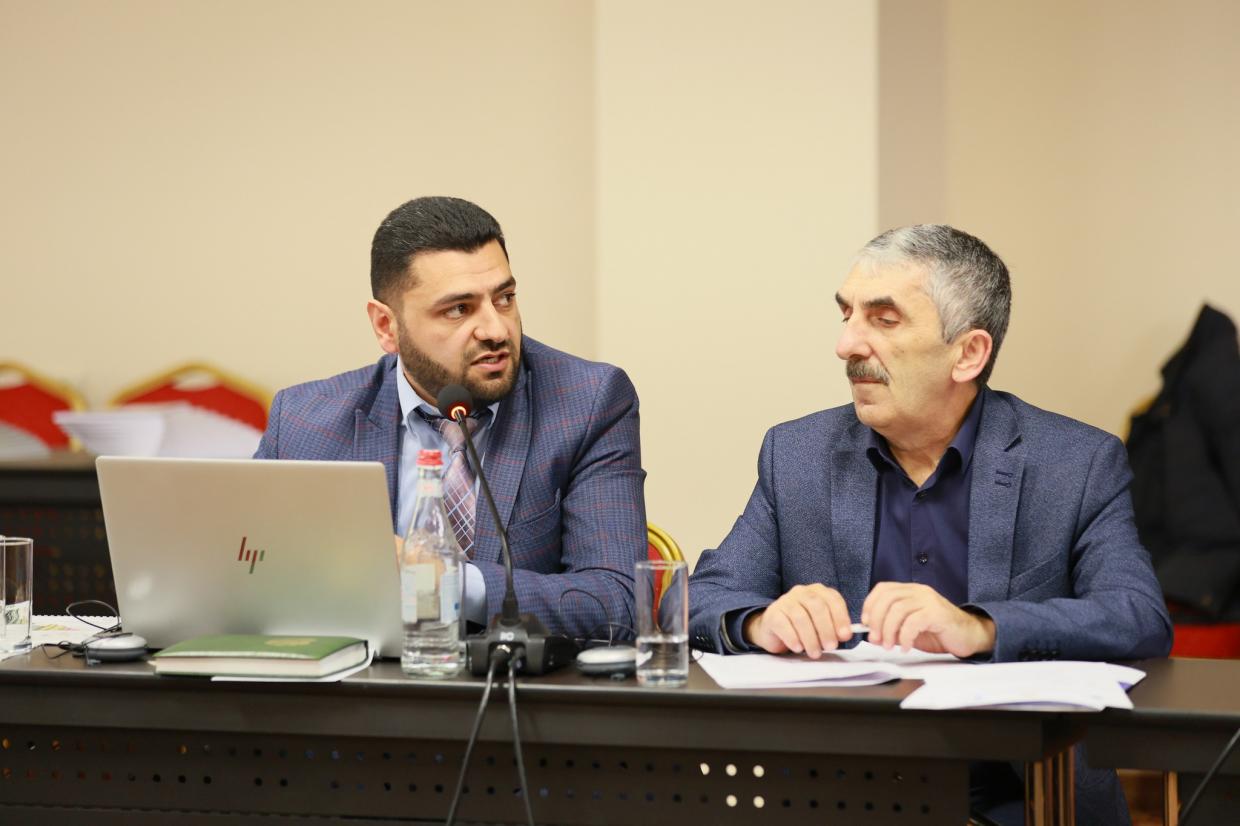
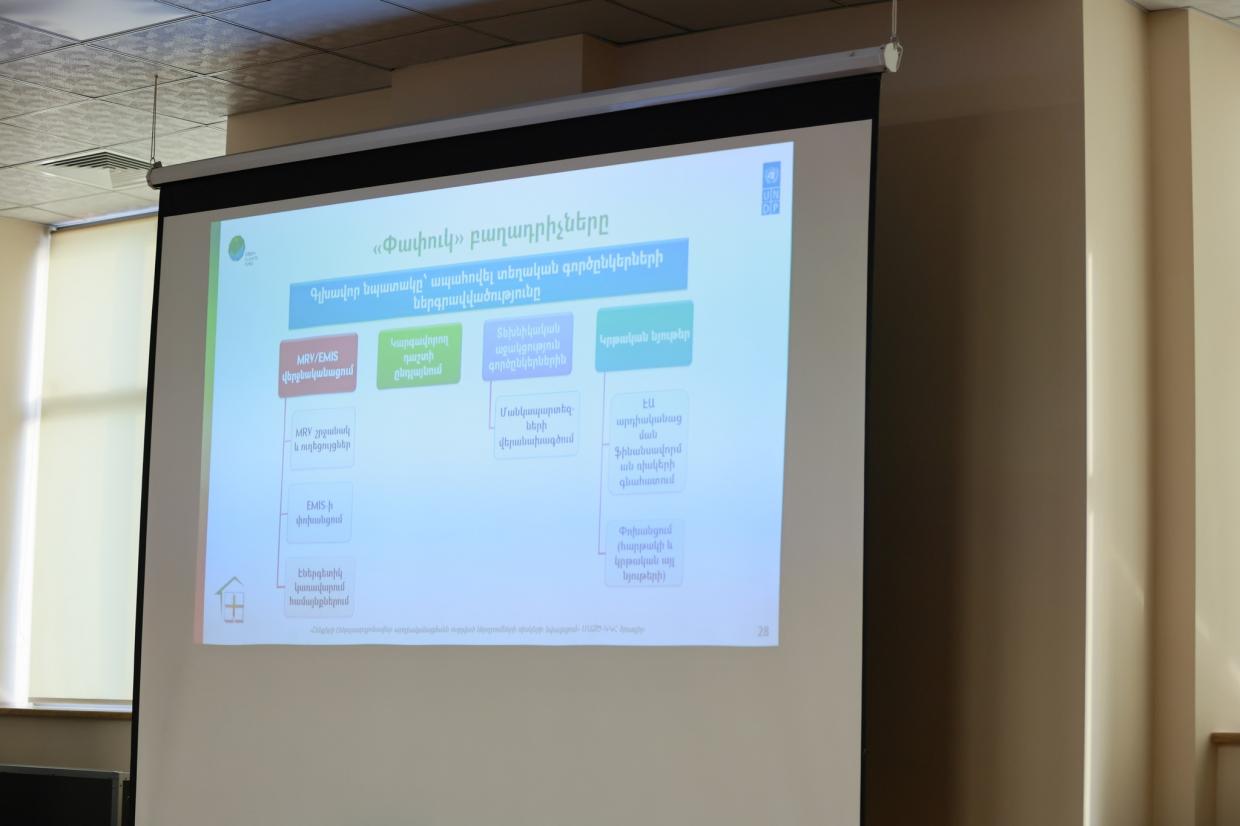
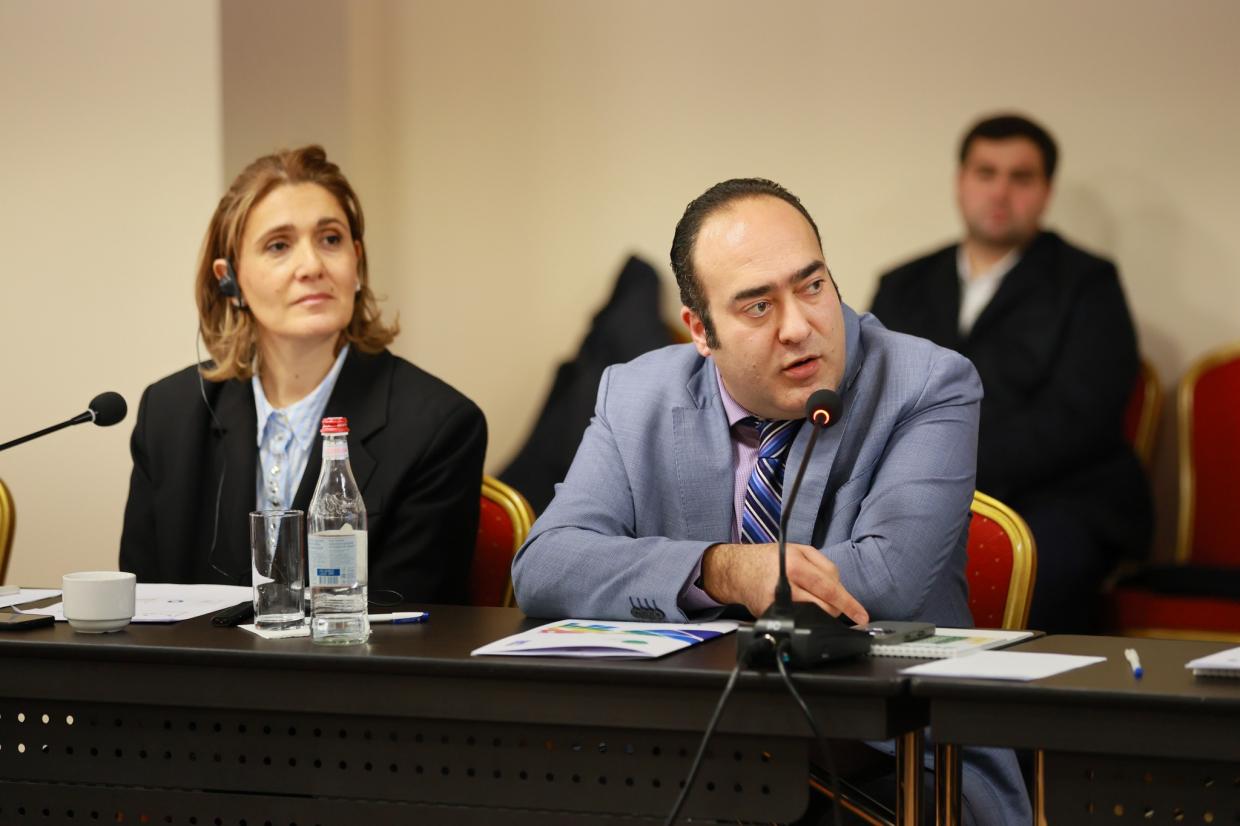
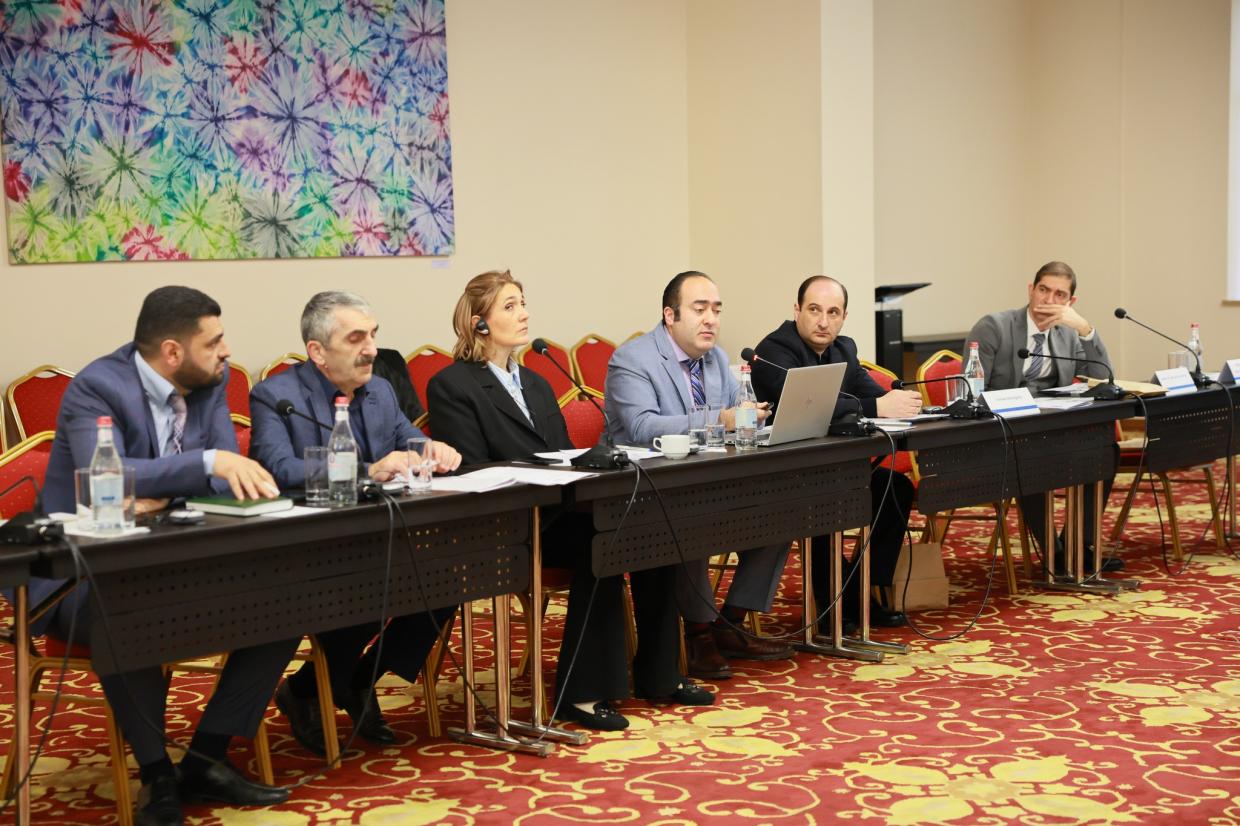
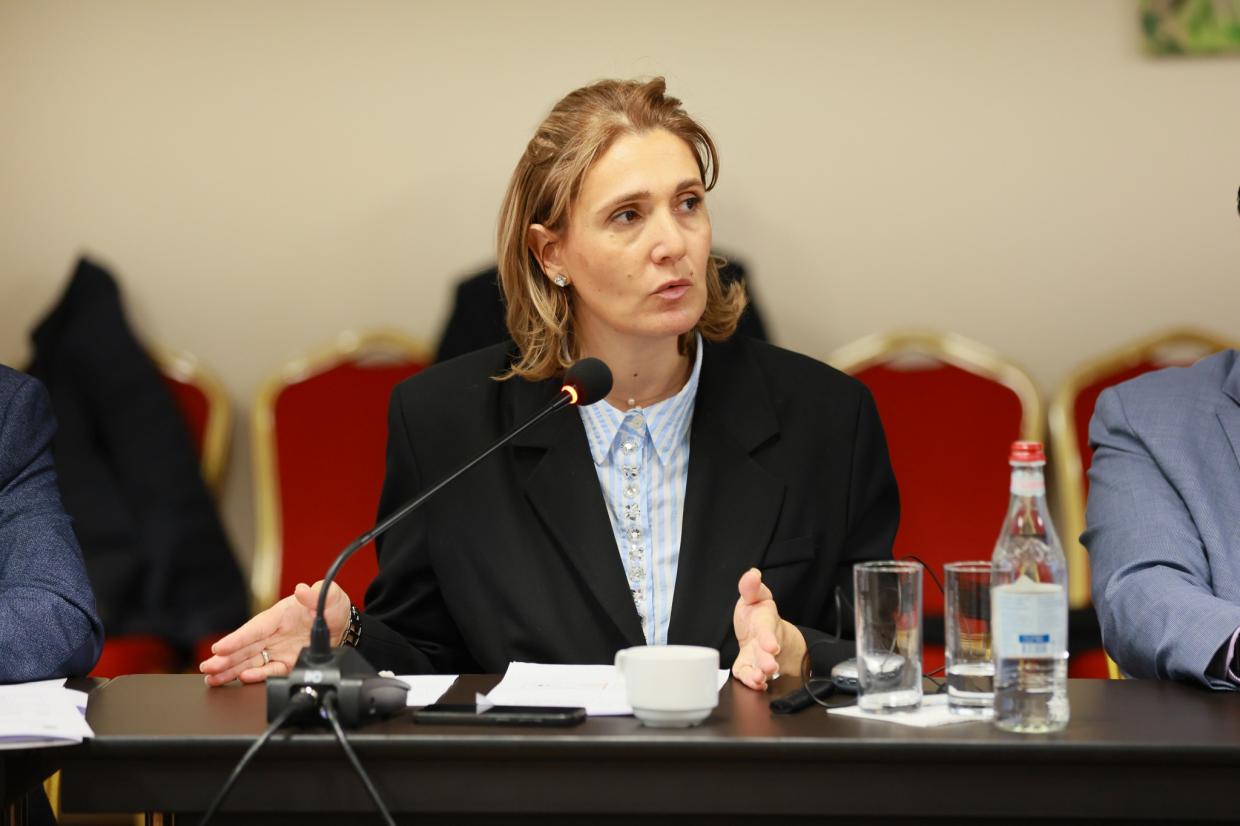












A meeting of the “De-risking and Scaling-up Investment in Energy Efficient Building Retrofits” UNDP–GCF Project Board was held to assess project progress, discuss challenges encountered during implementation, and agree on actions to ensure its smooth completion.
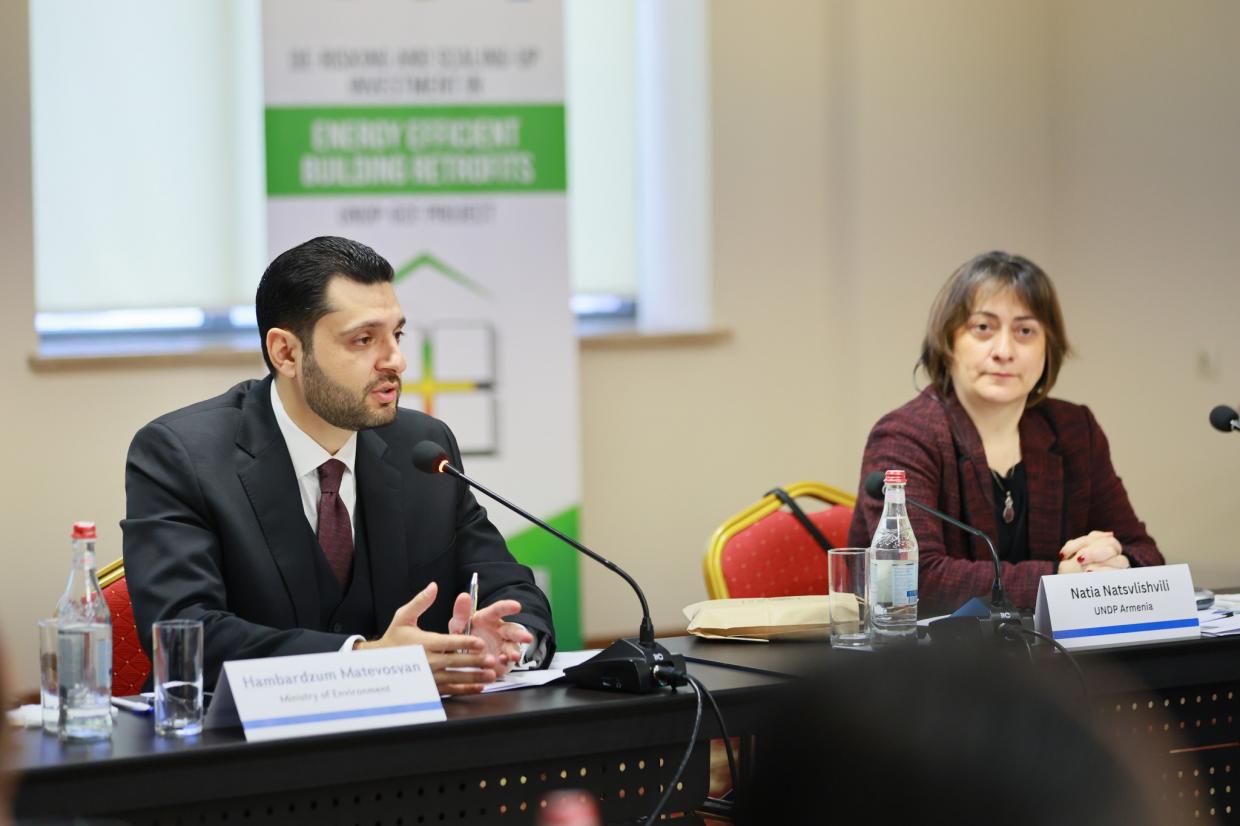
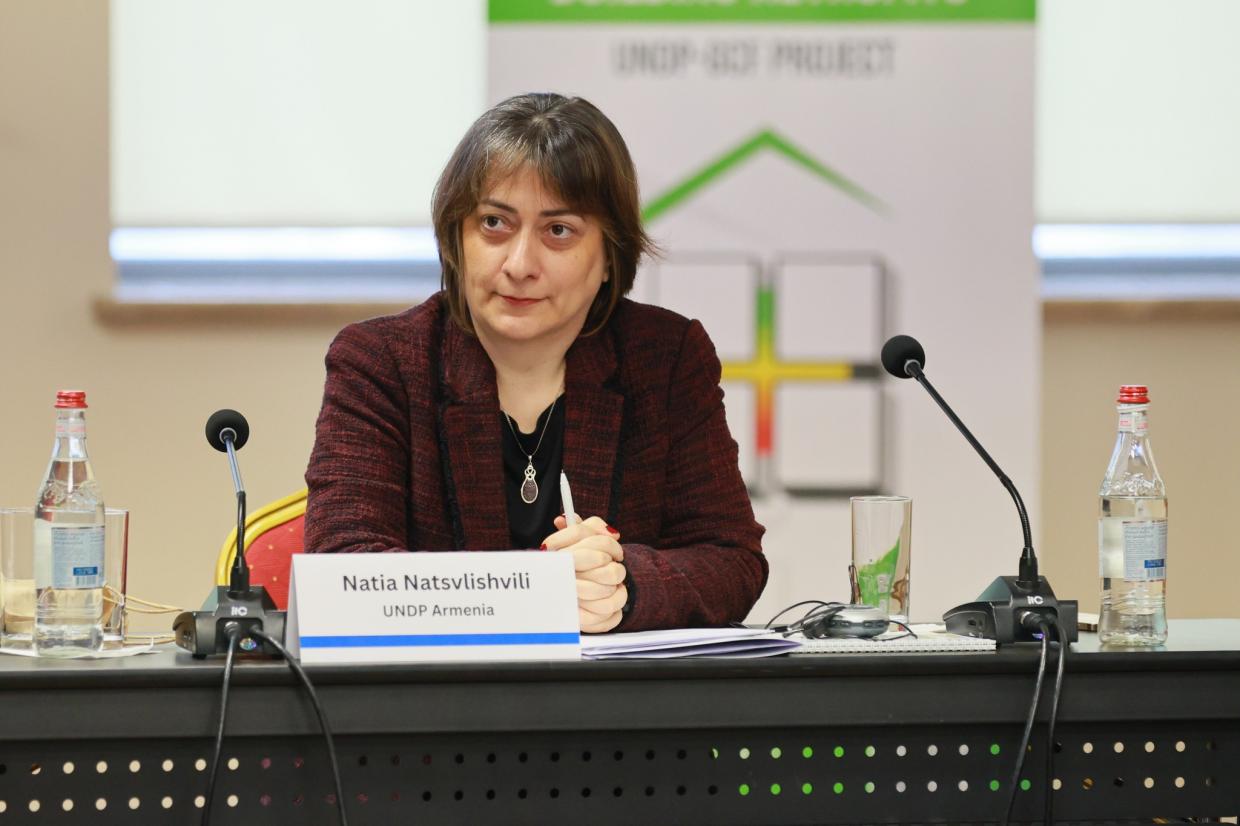
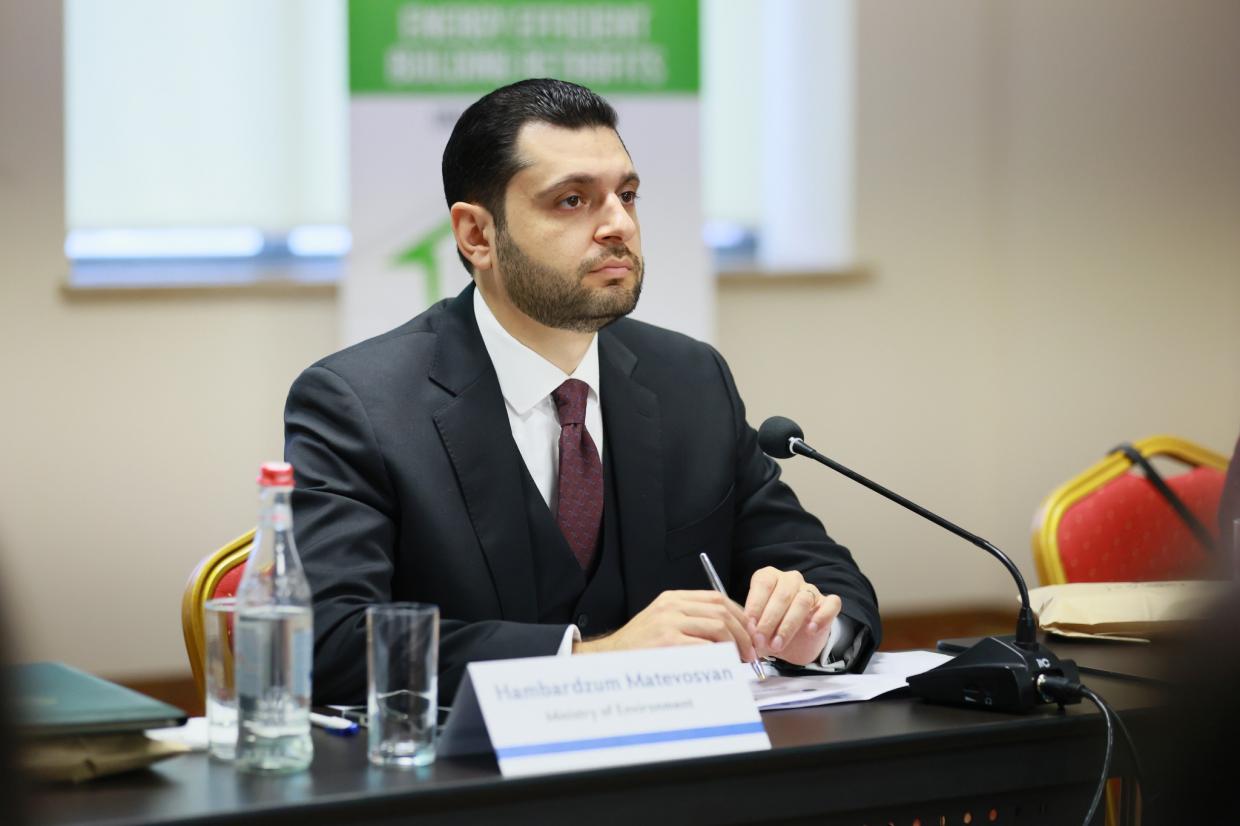
Hambardzum Matevosyan, Minister of Environment of the RA and Natia Natsvlishvili, UNDP Resident Representative in Armenia attended the meeting.
The Minister delivered opening remarks and presented the measurable results achieved by the project to date.
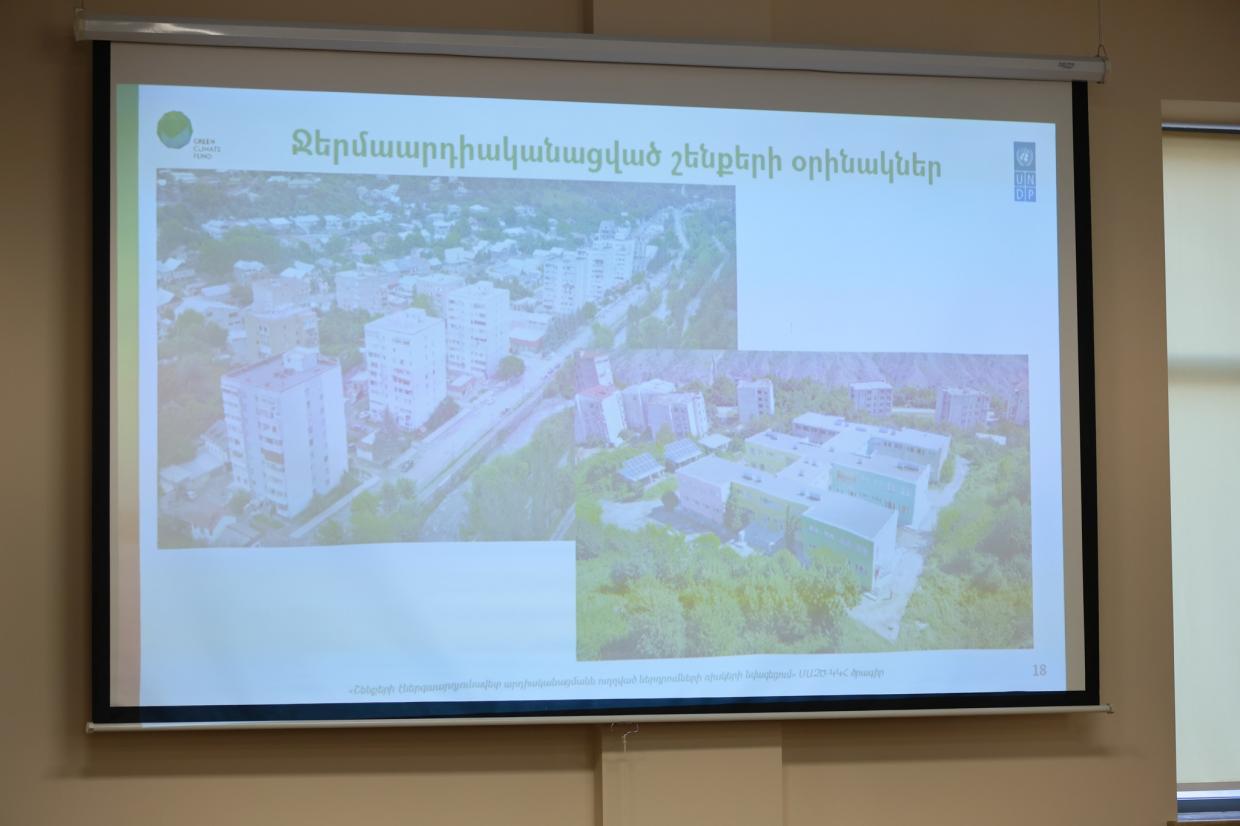
“To date, the Project has delivered tangible and measurable outcomes through the energy-efficient modernization of 316 buildings, resulting in an annual reduction of CO₂ emissions of approximately 63,000 tons. More than 400,000 people have benefited from the project, more than half of whom are women and girls.
Buildings account for about 35% of final energy consumption in Armenia, and improving their energy performance also delivers significant environmental benefits, as any initiative that contributes to addressing the global climate crisis is of great importance,” the Minister noted. Hambardzum Matevosyan also emphasized that the successful completion of the project largely depends on effective and timely cooperation between state institutions, local self-government bodies, and the private sector.
“The fight against climate change requires strong and continuous partnerships,” said Natia Natsvlishvili, UNDP Resident Representative in Armenia. “This project demonstrates how close cooperation between UNDP and the Government of Armenia translates climate commitments into tangible improvements in people’s daily lives. As we enter the final phase of the project, maintaining momentum will be crucial to maximizing its long-term impact,” Natia Natsvlishvili noted.
The Minister also stressed the importance of strong national ownership and institutional coordination, underscoring that the progress achieved reflects effective cooperation at both the national and local levels.
The Board further discussed issues related to the sustainability of results and ensuring continuity after the completion of the project, highlighting the importance of continued inter-agency collaboration.